Is light equipment overrated?
No, a -1% in weight can mean +5% in speed. Here's how to figure it out.
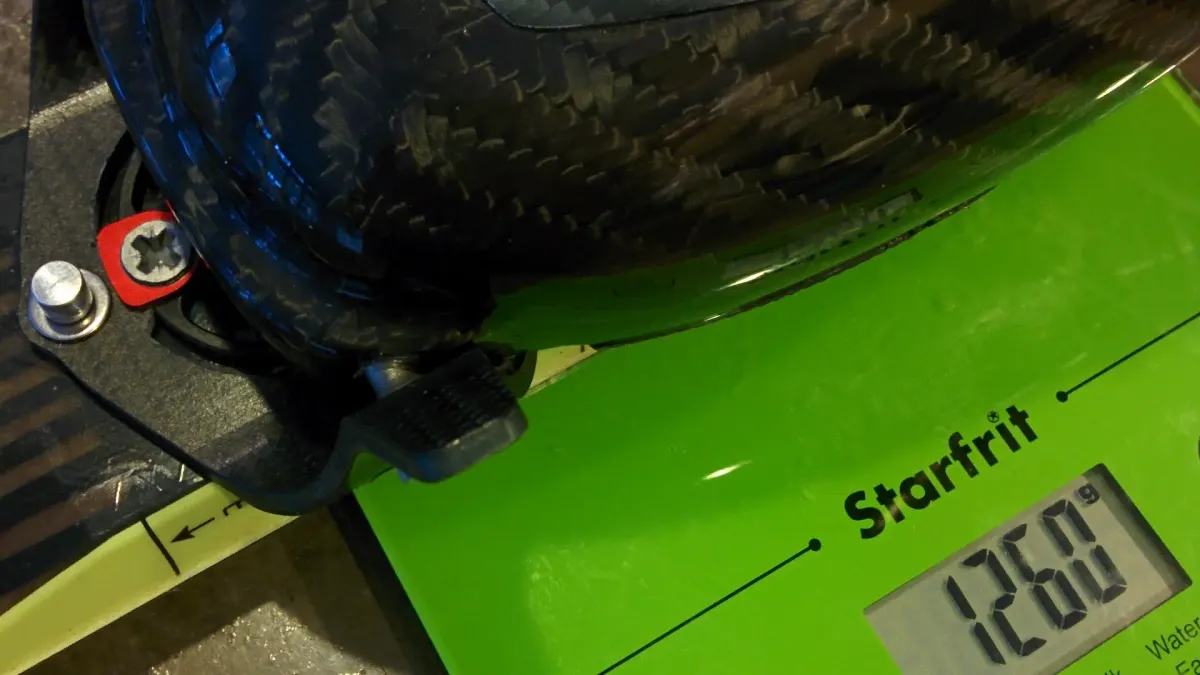
Last week, I tested three different equipment setups and their impact on uphill speed. The verdict? Every 1% removed from the feet increased uphill speed by 5%, with no speed penalty on the descent.
Here's the formula you need to make weight changes relevant to you:
- Calculate your total system weight:
- Weigh and sum your body weight, clothing (including helmet and gloves), and equipment (skins, skis, bindings, boots, and poles). For example:
- Joe's total system weight is 75 kg; while
- Sally's is 50kg.
- Multiply your total system weight by 0.01 to find what 1% means for you.
- For example:
- Joe's 1% is 750 grams: 75 kg x 0.01 = 0.75 kg; but
- Sally's 1% is 500 grams: 50 kg x 0.01 = 0.50 kg.
- For example:
- If changing your total system weight, divide the increase or decrease in weight by your 1%.
- If Joe and Sally are both thinking about upgrading their equipment and dropping their total system weight by 1.5 kg:
- Joe's speed adjustment factor is: 1.5 kg / 0.75 = 2; but
- Sally's speed adjustment factor is: 1.5 kg / 0.5 = 3.
- If Joe and Sally are both thinking about upgrading their equipment and dropping their total system weight by 1.5 kg:
- Multiply 5% by your speed adjustment factor to get your speed adjustment percentage.
- For example:
- Joe's is: 5% x 2 = 10%;
- Sally's is: 5% x 3 = 15%.
- For example:
- Multiply your estimated time trial time by one minus your speed adjustment percentage.
- For example:
- Joe's time would be adjusted by: 1 - 2 x 0.05 = 0.90;
- Sally's time would be adjusted by: 1 - 3 x 0.05 = 0.85.
- For example:
If Joe and Sally were competing, and their time trial pace before the upgrade was 60 minutes, then after the upgrade, Joe's would be 54 minutes, while Sally's would be 51.
Note that:
- This is a fudgy formula. The real-world effects likely reach a point of diminishing returns, but those diminished returns usually occur much later than most people realize.
- The important thing is not the geekery but the big-picture principles:
- Weight has a much more significant impact than most people realize;
- Weight has a more substantial effect on smaller people.
Thanks for reading. For even more geekery, read the full article.