Embrace the next generation.
A lesson in scrambled eggs, a legendary climber, and sim racing—how experience can benefit from new knowledge.
"Do you want to know how to make your eggs less rubbery?" a 14-year-old house guest asked me.
"Uh...sure," I said, smiling.
"First, get the pan really hot. Then, as soon as you pour the eggs in, turn it down to Low. Keep scrambling them as the pan cools."
No way this kid knows anything, I thought. I'll humor him.
But I was wrong. It works really well.
And it reminded me of an ice climber.
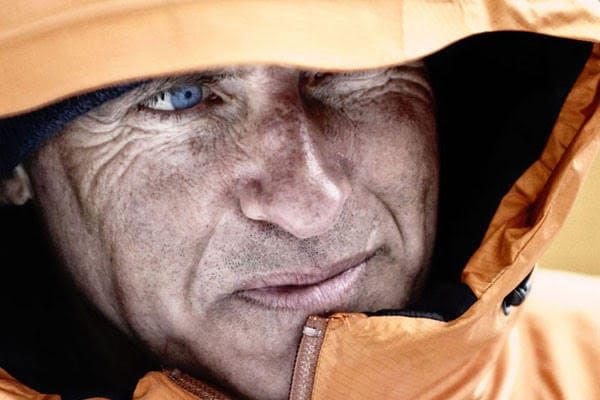
Guy Lacelle, one of the most prolific ice climbers in history, absorbed these types of lessons naturally. Instead of skepticism, curiosity was his superpower.
When sport mixed climbing surged in popularity in the early 2000s, many of Guy's contemporaries criticized and ignored it. But not Guy. Even as an icon of the sport, he jumped right in and started clipping bolts.
Guy saw past the boundaries of ice climbing. He looked toward what climbing might become, rather than what it had been. Instead of rejecting sport mixed as “not ice climbing”, he gladly carried more quickdraws, and fewer ice screws, when a route called for it.
His actions carried a lot of weight. He went so far as competing, usually with climbers half his age. He continued climbing at a high level during years that normally see a decline.
As an added bonus, our respect for him only grew. His participation felt like a pat on the back, a huge stamp of approval. We admired Guy already, but for him to embrace this thing that most of his contemporaries criticized, we loved and respected him even more.
Around the same time that I learned to cook scrambled eggs, I joined the Almeida Racing Academy. I wanted to learn to drive fast (on a track), but track time is heinously expensive. Sim racing seemed like the most cost-effective way to learn—if it worked—but sim racing communities are... young. And the Almeida group uses Discord, which I hate.
Discord is a hot, noisy mess of spastic SMS-like exchanges and horrible search. It's great for feeling part of a group, but adds way too much noise to the signal. ("Mute channel" is the best feature.) Beginner conversations spin off into irrelevant tangents and become digital examples of the blind leading the blind.
But the progress that Almeida students have made on real tracks is shocking. And inside the community are three outstanding coaches, two of whom drive in real life.
I thought of the 14-year-old and Guy. I was 50 when I learned how to cook scrambled eggs from our young guest. And 20 years prior, Guy didn't hesitate to start clipping bolts. I grit my teeth and committed to sim racing. And Discord.
Once the snow had melted and the tracks had dried, I was eager to see if I could tell the difference. Discord continued to be annoying, and I felt hugely out of place, spending hours each week with drivers half my age, but it worked.
I hadn't been inside a real track car in six months, but I had spent several hundred hours inside a digital one. And my driving had taken a leap forward.
Experience is valuable when protecting established standards or managing known risks. But it can be limiting if we dismiss unfamiliar forms of knowledge. I need to identify those shifts in context and remind myself: Embrace the next generation.